01
First Step
Neurological Monitoring
Regular neurological evaluation and MRI monitoring help track tumor progression.
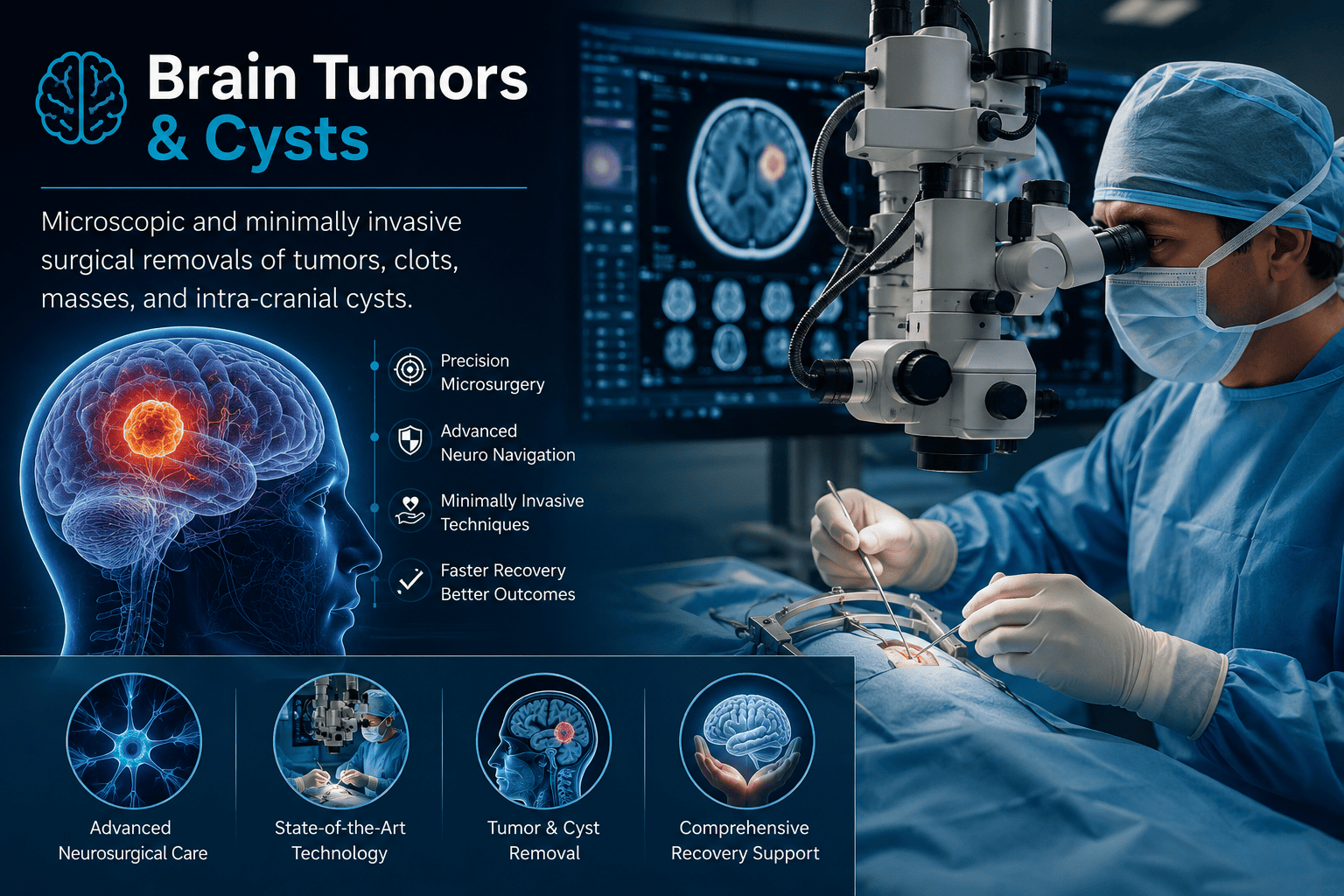
Microscopic and minimally invasive surgical removals of tumors, clots, masses, and intra-cranial cysts.
Advanced microscopic neurosurgery improves safety, precision, and neurological recovery outcomes.
Understanding the neurological causes and tumor risk factors
Symptoms vary depending on the location, size, and pressure caused inside the brain.
Frequent or severe headaches caused by increased pressure inside the skull.
Sudden seizure episodes or fits caused by abnormal brain activity.
Blurred vision, double vision, or difficulty focusing due to neurological pressure.
Weakness or reduced movement in arms or legs caused by brain involvement.
Difficulty balancing, walking, or maintaining body coordination.
Problems with memory, concentration, speech, or behavior.
Imaging, procedure stages, patient rehabilitation milestones, and advanced treatment visuals.
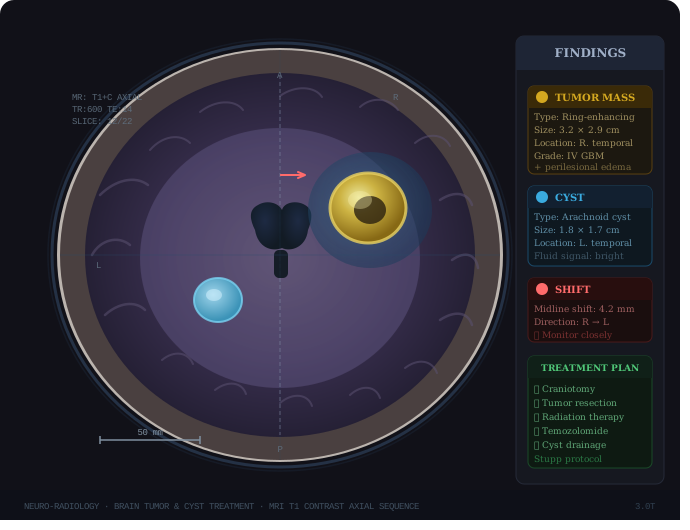
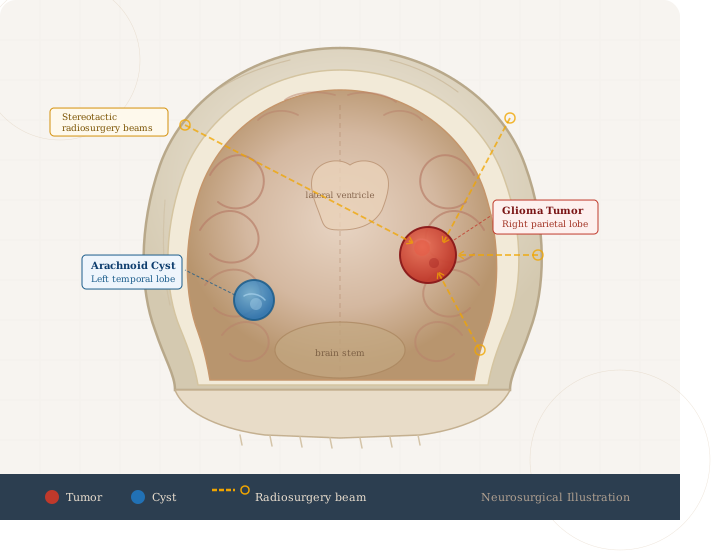
Treatment depends on the type, size, and location of the tumor or cyst. Advanced neurosurgical techniques improve precision, safety, and neurological recovery.
Recovery depends on the neurological condition, complexity of surgery, and rehabilitation process. Follow-up care helps restore neurological health and improve quality of life.
Neurological monitoring and pain management begin immediately after surgery.
Physical and neurological rehabilitation programs improve strength and coordination.
Most patients gradually return to routine activities under medical supervision.