Skip to Main Content
Advanced Neurology & Neurosurgery

Head Injury & Trauma

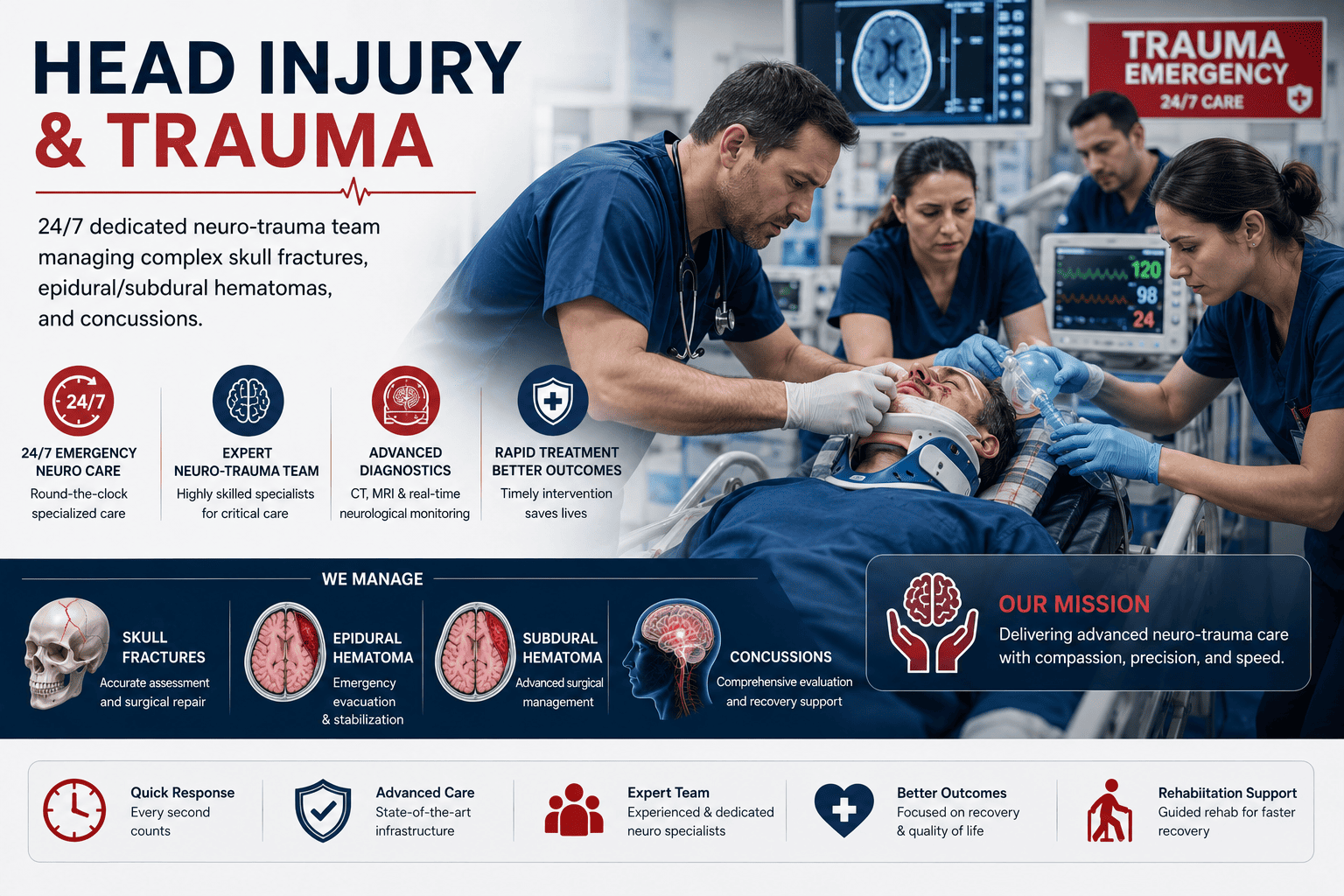
24/7 dedicated neuro-trauma team managing complex skull fractures, epidural/subdural hematomas, and concussions.

24/7 neuro-trauma emergency care
700+ head injury cases treated
95% critical care support
Medical Overview

What Is Head Injury & Trauma?

Head injury and neuro-trauma involve damage to the skull, scalp, or brain caused by accidents, falls, sports injuries, or severe impacts. Serious trauma may result in brain bleeding, fractures, swelling, or neurological complications requiring immediate medical attention.
Rapid neuro-trauma intervention and advanced neurosurgery significantly improve survival and neurological recovery outcomes.
What Is Head Injury & Trauma?
Risk Factors
  • Road Accidents Vehicle accidents are a major cause of severe traumatic brain injuries.
  • Falls Falls from height or slips commonly cause head trauma.
  • Sports Injuries High-impact sports increase the risk of concussions and skull injuries.
  • Workplace Trauma Industrial and construction accidents may result in serious head injuries.
Understanding the Condition

Causes of Head Injury & Trauma

Understanding traumatic brain injuries and neurological emergencies

Head injuries commonly occur due to road accidents, falls, sports injuries, workplace trauma, assaults, or sudden impacts to the head. Severe injuries may lead to brain hemorrhage, skull fractures, or long-term neurological complications.
Signs to Watch For

Symptoms of Head Injury & Trauma

Symptoms vary depending on the severity of the head injury and brain involvement.

Loss of Consciousness

Temporary unconsciousness or blackouts following head trauma.

Severe Headache

Persistent or worsening headache caused by brain injury or bleeding.

Vomiting

Repeated vomiting or nausea after head injury may indicate brain pressure.

Memory Problems

Confusion, memory loss, or difficulty concentrating after trauma.

Balance Difficulty

Dizziness, imbalance, or trouble walking after neurological injury.

Seizures

Sudden seizure activity caused by traumatic brain injury.

Personalised Care Pathways

Treatment Options for Head Injury & Trauma

Treatment depends on the severity of the injury, brain swelling, bleeding, fractures, and neurological condition of the patient.

01
First Step

Neurological Observation

Continuous neurological monitoring helps detect worsening brain injury symptoms.

02
Non-Surgical

Medication Management

Pain control and anti-seizure medications help stabilize neurological condition.

03
Recovery

Rehabilitation Therapy

Physical and cognitive rehabilitation support long-term neurological recovery.

01
Emergency

Brain Swelling Control

Emergency medications reduce brain swelling and intracranial pressure.

02
Advanced

Neurocritical Medication

Specialized neurocritical care medications stabilize severe trauma cases.

01
Advanced

Hematoma Removal Surgery

Emergency surgery removes blood clots and reduces dangerous brain pressure.

02
Specialized

Skull Fracture Repair

Surgical repair stabilizes fractured skull bones and protects the brain.

03
Gold Standard

Decompressive Craniectomy

Advanced neurosurgical procedure relieves severe brain swelling and pressure.

Your Healing Journey

Recovery After Head Injury

Recovery depends on the severity of the brain injury, treatment timing, and rehabilitation support. Long-term neurological follow-up improves physical and cognitive recovery.

Week 1

Critical Monitoring

Neurological stabilization and emergency trauma care begin immediately.

Week 3

Rehabilitation Phase

Therapy programs help restore movement, coordination, and cognitive function.

Week 6

Functional Recovery

Patients gradually return to normal daily activities with continued medical guidance.

Common Questions

Frequently Asked Questions

Immediate medical care is required if there is unconsciousness, vomiting, seizures, or worsening headache.
A concussion is a mild traumatic brain injury caused by sudden impact or shaking of the head.
Many patients recover well with early treatment, surgery when necessary, and rehabilitation therapy.
WhatsApp Call