01
First Step
Neurological Monitoring
MRI scans and neurological assessments help track spinal tumor progression.
Advanced microsurgery to safely isolate and resect intricate intra-medullary and extra-medullary spinal masses.
Advanced spinal microsurgery helps safely remove tumors while preserving mobility and neurological function.
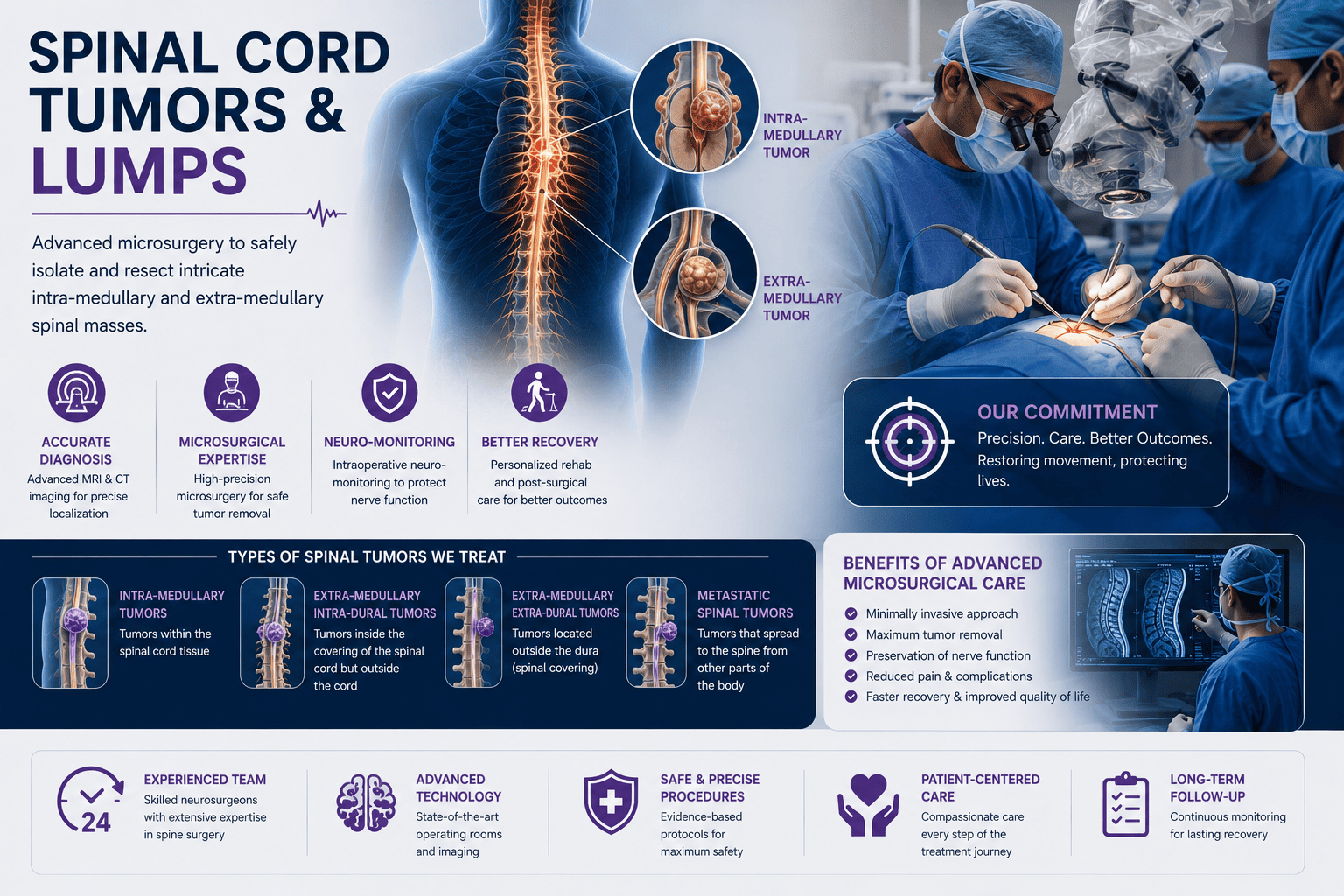
Understanding spinal tumor formation and neurological risk factors
Symptoms depend on the size, location, and pressure caused on the spinal cord and surrounding nerves.
Persistent back pain that worsens over time or during movement.
Tingling or numbness in arms, legs, or feet due to spinal nerve compression.
Weakness in limbs causing difficulty walking or reduced grip strength.
Difficulty maintaining balance or coordinating body movements.
Loss of bladder or bowel control caused by spinal cord involvement.
Pain spreading into arms or legs along affected spinal nerves.
Imaging, procedure stages, patient rehabilitation milestones, and advanced treatment visuals.
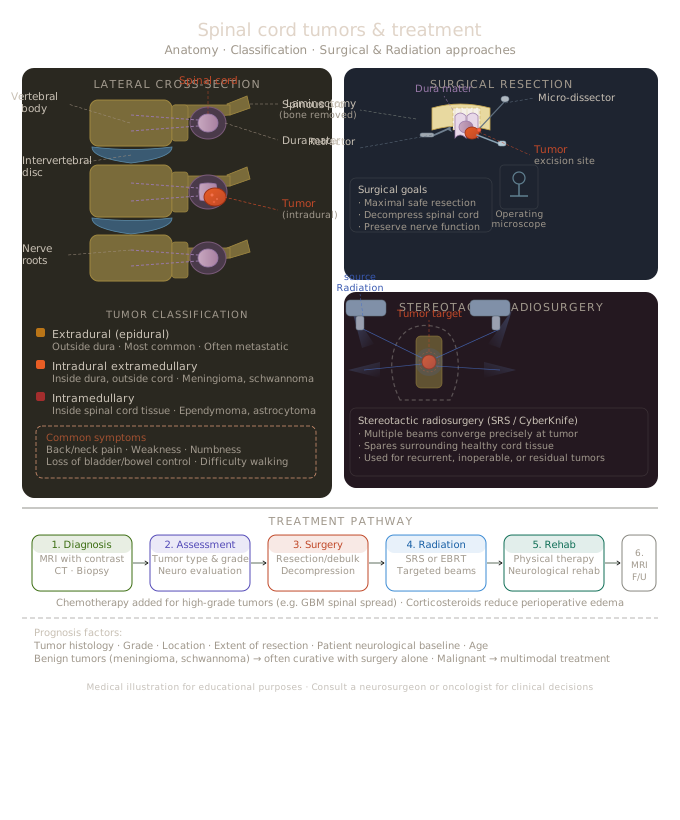
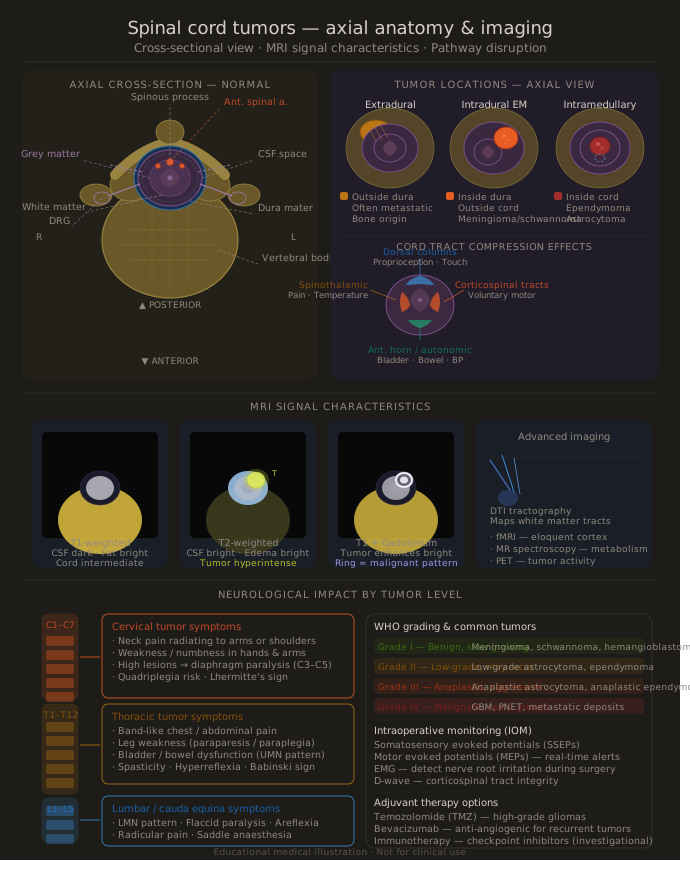
Treatment focuses on safely removing tumors, relieving spinal cord pressure, preserving neurological function, and improving long-term mobility.
Recovery depends on tumor size, spinal involvement, and neurological condition. Rehabilitation and follow-up care help restore mobility and improve quality of life.
Neurological observation and pain control begin immediately after surgery.
Physical therapy improves movement, balance, and muscle strength.
Most patients gradually regain mobility and daily independence.