01
First Step
Physiotherapy
Strengthening and posture correction exercises improve spinal support and mobility.
Surgical correction for structural gaps, listhesis, spinal stenosis, spinal cord thinning, and limb weaknesses.
Advanced spinal correction surgery restores stability, relieves nerve pressure, and improves long-term mobility.
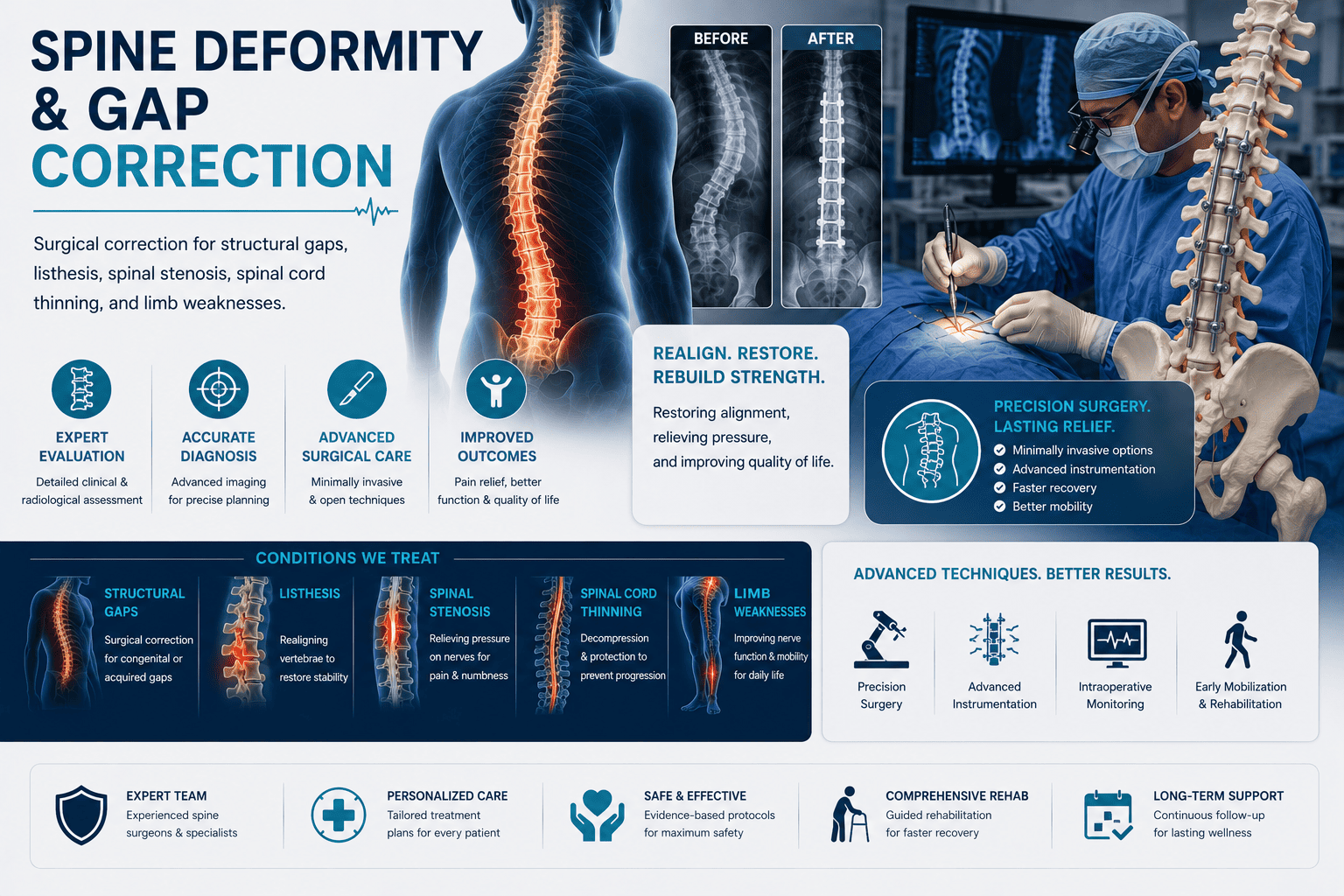
Understanding spinal degeneration and structural instability
Symptoms depend on the severity of spinal instability and nerve compression.
Persistent spinal pain affecting posture, movement, and daily activities.
Weakness in arms or legs caused by spinal cord or nerve compression.
Tingling or numbness in limbs due to spinal nerve irritation.
Balance issues and walking difficulty caused by spinal instability.
Abnormal spinal curvature or body alignment changes.
Reduced neck flexibility and discomfort associated with spinal degeneration.
Imaging, procedure stages, patient rehabilitation milestones, and advanced treatment visuals.
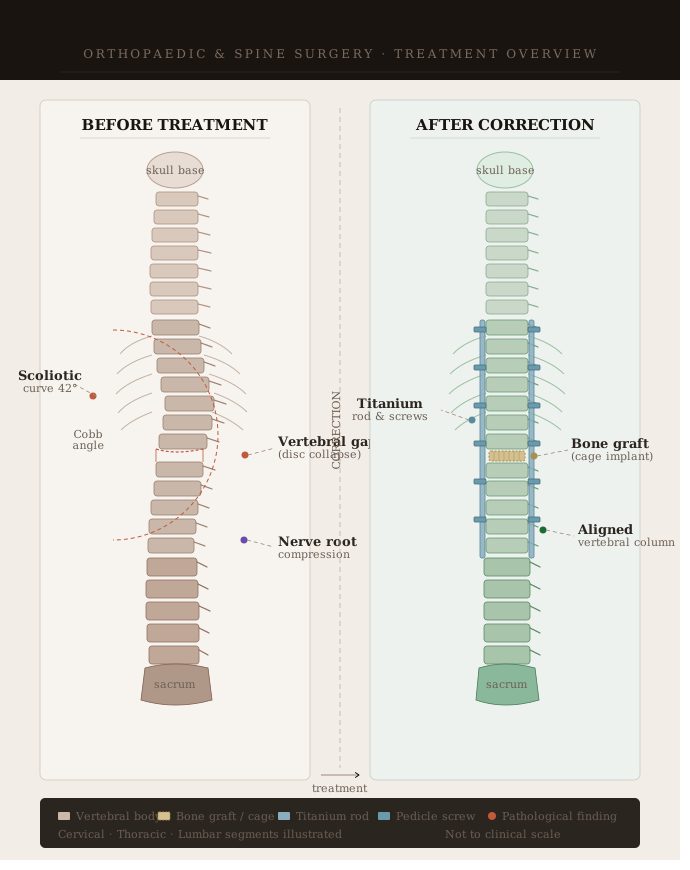
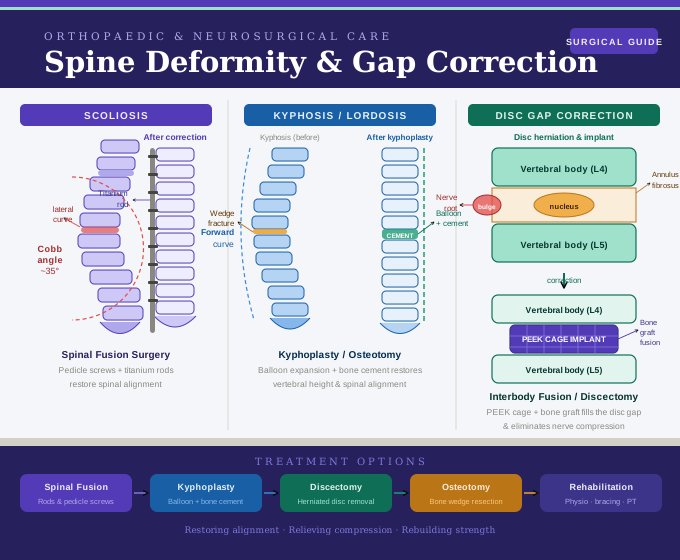
Treatment focuses on relieving nerve pressure, stabilizing the spine, correcting deformities, and restoring mobility and spinal balance.
Recovery depends on spinal condition severity, surgical complexity, and rehabilitation participation. Long-term physiotherapy improves posture, movement, and spinal stability.
Pain control and spinal monitoring begin immediately after treatment.
Physiotherapy improves spinal flexibility, posture, and muscle strength.
Patients gradually resume normal activities with improved spinal support.